Mission Solar MSE PERC 72 385W
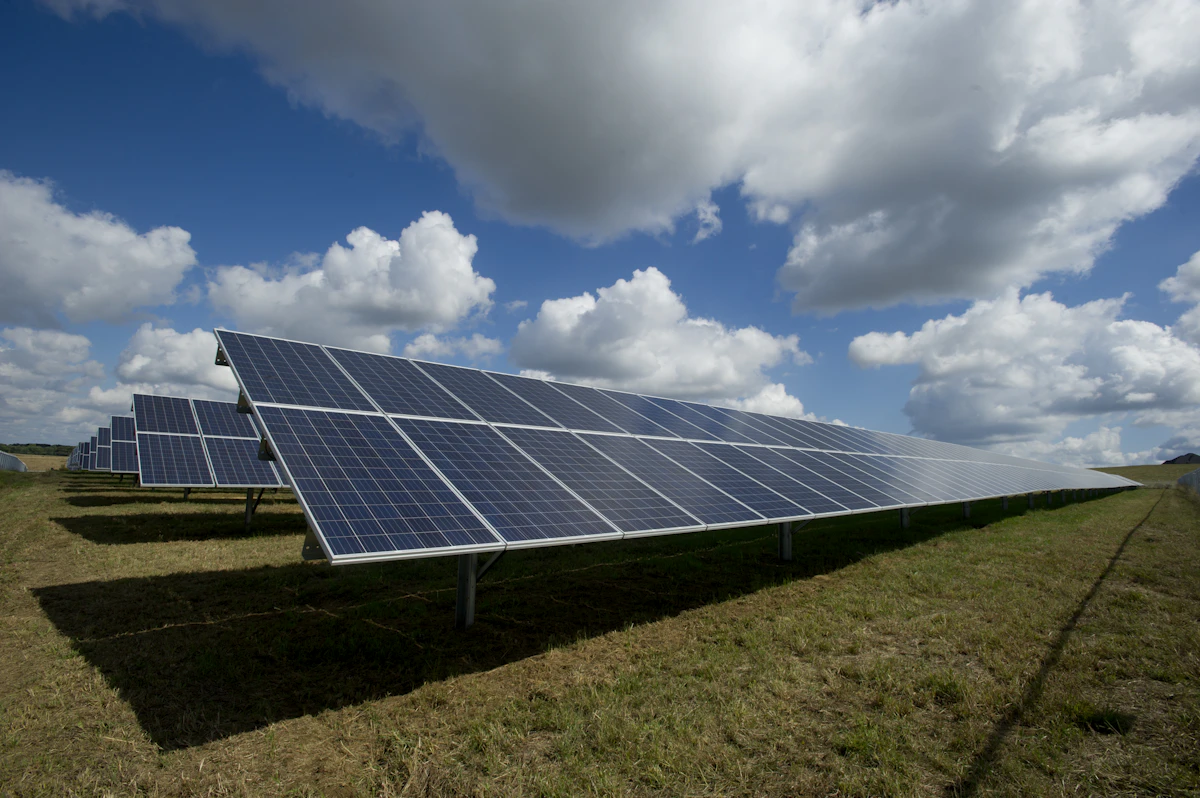
Mission Solar's 72-cell PERC panel delivers 385W in a commercial form factor, ideal for larger US-made installations.
⚠️ Specs Pending Verification · status: unverified
As of 2026-05-24: SSOT efficiency 20% conflicts with physical calculation yielding 14.9% — Mission Solar MSE PERC 72 385W dimensions likely include frame area; real cell area calculation suggests true module efficiency is ~15%. Pending missionsolar.com official datasheet verification.
Last review attempt: 2026-05-24 · See our methodology
At a glance
Value comparison (same class)
How the Mission Solar MSE PERC 72 385W stacks up against other panels in the 385W±100W range.
| Model | Score | Efficiency | $/W | Warranty | Value |
|---|---|---|---|---|---|
| ★ THIS — Mission Solar MSE PERC 72 385W | 78 | 20% | — | 25 yr | Solid |
| Meyer Burger Glass 390W | 97 | 21.2% | $0.58 | 25 yr | Excellent |
| Q CELLS Q.PEAK DUO BLK ML-G10+ 400W | 88 | 20.9% | — | 25 yr | Good |
| JA Solar DeepBlue 3.0 400W | 75 | 20.9% | — | 12 yr | Solid |
Where this panel works best
Climate-adapted recommendations based on temperature coefficient, snow load, and warranty profile.
Click a state for the full local solar buying guide (incentives, payback, top installers).
Pricing
Public pricing data is limited for the Mission Solar MSE PERC 72 385W. Request multiple installer quotes to benchmark per-watt cost in your area.
Live historical pricing trends coming in v0.3 (integrating manufacturer MSRP + reseller data).
Recent news about Mission Solar
Latest manufacturer announcements, shipment updates, and product roadmap from public sources:
Best for these scenarios
- ✓ Roof area: 361 – 890 ft² (13–32 panels for a 5–12 kW system)
- ✓ Monthly usage: 676 – 1,663 kWh/month (assuming 4.5 peak-sun hrs/day average US)
- ✓ Best for: Commercial projects requiring US-manufactured 72-cell panels.
- ✗ NOT ideal for: heavy snow regions — lower snow load rating
Full Datasheet — every parameter ▾
Key Specifications
| Brand | Mission Solar |
| Model | Mission Solar MSE PERC 72 385W |
| Power Output | 385W |
| Efficiency | 20% |
| Power Density | 13.8 W/sq ft |
| Cell Type | PERC Mono |
| Cell Count | 144 cells |
| Dimensions | 2278 x 1134 x 35 mm |
| Weight | 26 kg |
| Open Circuit Voltage (Voc) | 48.5V |
| Max Power Voltage (Vmp) | 40.5V |
| Short Circuit Current (Isc) | 10.27A |
| Max Power Current (Imp) | 9.51A |
| Temp Coefficient (Pmax) | -0.35%/°C |
| Product Warranty | 25 years |
| Performance Warranty | 25 years |
| First Year Degradation | 1% |
| Annual Degradation | 0.4% |
| Country of Manufacture | United States |
| Certifications | IEC 61215, IEC 61730, UL 1703 |
| Snow Load | 2400 Pa (50.1 psf) |
| Wind Load | 2400 Pa (50.1 psf) |
Pros & Cons
Pros
- ✓ US manufactured commercial panel
- ✓ 25-year warranty
- ✓ 72-cell format
- ✓ ARRA compliant
Cons
- ✗ Lower efficiency
- ✗ Heavy commercial size
- ✗ Older technology
Installation & Compatibility
System Voltage & String Sizing
- Open Circuit Voltage (Voc)
- 48.5V
- Max Power Voltage (Vmp)
- 40.5V
- Short Circuit Current (Isc)
- 10.27A
- Max Power Current (Imp)
- 9.51A
- Max Panels per String (600V)
- 12 panels
Based on NEC 600V residential limit. Actual string sizing should account for cold-temperature Voc rise.
Mounting Requirements
- Dimensions
- 2278 x 1134 x 35 mm
- Weight
- 26 kg (57.3 lbs)
- Area per Panel
- 27.8 sq ft
- Weight per sq ft
- 2.1 lbs/sq ft
Recommended Inverter Types
- - Microinverters: Ideal for shaded roofs. Match to panels rated 385W+.
- - String Inverters: Cost-effective for unshaded arrays. MPPT must cover 40.5V.
- - Hybrid Inverters: Best if adding battery storage. Check Voc of 48.5V.
Is the Mission Solar MSE PERC 72 385W Worth It?
The Mission Solar MSE PERC 72 385W delivers 385W of power at 20% module efficiency, which is below the current industry average of approximately 21%. While not the highest-efficiency option on the market, it may offer compelling value depending on price and your available roof space.
From a warranty perspective, the MSE PERC 72 385W comes with a industry-leading 25-year product warranty and a 25-year performance guarantee. The industry standard for product warranties ranges from 12 to 25 years, so this panel sits at the top of that range, giving you long-term peace of mind. At the end of 25 years, the panel is guaranteed to still produce approximately 89.4% of its rated output, with first-year degradation of 1% and just 0.4% per year after that.
Pricing varies by region and installer, but the MSE PERC 72 385W's combination of 20% efficiency and 25-year warranty should be weighed against per-watt quotes from your installer. Request at least three quotes to ensure you are getting competitive pricing for this tier of panel.
For hot climates, the temperature coefficient of -0.35%/°C is average. This is on the higher end, meaning noticeable power reduction when temperatures climb well above 25°C (77°F). If you live in a consistently hot climate, consider a panel with a lower temperature coefficient. Overall, the Mission Solar MSE PERC 72 385W can be a reasonable choice depending on your budget and performance requirements.
What Makes the Mission Solar MSE PERC 72 385W Different
The Mission Solar MSE PERC 72 385W is manufactured in San Antonio, Texas — one of only a handful of solar panels genuinely made in the USA. Mission Solar's domestic manufacturing makes their panels eligible for maximum Inflation Reduction Act incentives, including the domestic content bonus credit on top of the standard 30% ITC. At 385W and 20% efficiency with 144 PERC Mono cells, the MSE PERC 72 385W delivers solid performance from American-made cells and modules. The 2278×1134mm format at 26 kg fits standard residential racking systems. Mission Solar backs their panels with a 25-year product and 25-year performance warranty. For buyers who prioritize American manufacturing and want to maximize federal tax incentives, Mission Solar is one of the strongest options available.
Real-World Performance
In real-world conditions, the Mission Solar MSE PERC 72 385W delivers consistent energy production shaped by its -0.35%/°C temperature coefficient. On a hot summer day when panel surface temperatures reach 65°C (40°C above STC), the MSE PERC 72 385W loses approximately 14.0% of rated output — typical for PERC technology. Over a full year in a typical US location, expect annual specific yield of 1,400-1,700 kWh per kW installed, depending on location, tilt, and shading. The 1% first-year degradation settles into 0.4% annual degradation thereafter; after 25 years the MSE PERC 72 385W should still produce approximately 89.4% of its original rating. The 144 half-cut cells provide improved shade tolerance compared to full-cell designs — when one cell is shaded, only one sub-string is affected rather than an entire string, limiting production losses to approximately one-third of the panel rather than one-half.
Who Should Buy the Mission Solar MSE PERC 72 385W?
System Design Tips
For string inverter systems, the Mission Solar MSE PERC 72 385W's Voc of 48.5V allows up to 12 panels per string on a 600V inverter, or 9 panels per string on 480V systems. The Isc of 10.27A is within the input range of all major residential string inverters and microinverters. For microinverter pairing, the Enphase IQ8A (366VA) or IQ8H (384VA) handles the 385W output well with a DC/AC ratio of 1.1-1.0. SolarEdge P505 optimizers pair well for optimizer-based systems. Size your inverter at 75-90% of total DC wattage for optimal clipping management — for a 26-panel array (10.0 kW DC), a 8 W AC inverter is a good match. The panel handles 2400 Pa snow load and 2400 Pa wind load.
Price Estimate
The Mission Solar MSE PERC 72 385W is sold through residential solar distributors and installers. Mission Solar pricing varies by distributor and order volume. For a 26-panel system (10.0 kW DC), total installed cost including panels, inverter, racking, wiring, permitting, and labor typically runs $2.50-3.50/W, or approximately $30,030-$35,035 before the 30% federal ITC. After ITC: approximately $21,021-$24,525. Domestic content bonus credits under IRA may reduce costs further.
Frequently Asked Questions
How efficient is the Mission Solar MSE PERC 72 385W compared to other panels?
The MSE PERC 72 385W achieves 20% module efficiency, which is standard for PERC residential panels. PERC panels typically range from 20.0% to 21.8%, and the MSE PERC 72 385W delivers standard performance within that range. Higher efficiency means more watts per square foot of roof space.
What is the warranty on the Mission Solar MSE PERC 72 385W?
Mission Solar provides a 25-year product warranty covering manufacturing defects and a 25-year performance warranty guaranteeing output levels. The performance warranty typically starts at 99% after year 1 and degrades by 0.4% per year, guaranteeing approximately 89.4% output at year 25. The extended product warranty coverage exceeds the industry standard of 10-12 years.
How many Mission Solar MSE PERC 72 385W panels do I need for my home?
For a typical US home using 10,000 kWh per year, you need approximately 26 panels (10.0 kW system) assuming 4-5 peak sun hours per day. This varies significantly by location — homes in Arizona may need 23-25 panels while homes in the Pacific Northwest may need 28-30 panels. Your installer will calculate the exact number based on your utility bills, roof orientation, shading, and local solar resource.
What is the efficiency of the Mission Solar MSE PERC 72 385W?
The Mission Solar MSE PERC 72 385W achieves 20% module efficiency using PERC Mono cell technology. This is around the industry average for residential solar panels in 2026.
What warranty does the Mission Solar MSE PERC 72 385W include?
It comes with a 25-year product warranty and a 25-year performance warranty guaranteeing output at approximately 89.4% of rated power at the end of the warranty period.
How does the Mission Solar MSE PERC 72 385W perform in hot weather?
With a temperature coefficient of -0.35%/°C, the MSE PERC 72 385W experiences moderate power reduction in high temperatures. Every degree above 25°C reduces output by 0.35%.
What size system can I build with the Mission Solar MSE PERC 72 385W?
At 385W per panel, you would need approximately 21 panels for an 8 kW system or 26 panels for a 10 kW system. Each panel measures 2278 x 1134 mm (27.8 sq ft).
What inverter is best with the Mission Solar MSE PERC 72 385W?
The Mission Solar MSE PERC 72 385W works well with both string inverters and microinverters. For string inverters, choose one with a maximum input voltage above 48.5V and an MPPT voltage range that covers 40.5V. Microinverters rated for 385W+ panels are also an excellent choice, offering panel-level monitoring and shade tolerance. Popular options include Enphase IQ8 series microinverters and SolarEdge string inverters with power optimizers.
How long will the Mission Solar MSE PERC 72 385W last?
The Mission Solar MSE PERC 72 385W is built to last well beyond its 25-year performance warranty. With first-year degradation of 1% and annual degradation of 0.4% thereafter, the panel will still produce approximately 89.4% of its rated power after 25 years. Most modern solar panels continue generating useful power for 30-40 years, though output gradually decreases over time.
Is the Mission Solar MSE PERC 72 385W good for Arizona and other sunny states?
The Mission Solar MSE PERC 72 385W can work in hot states like Arizona, Nevada, and Texas, though its temperature coefficient of -0.35%/°C means it will lose some output on the hottest days. Consider panels with a lower (closer to 0) temperature coefficient if you live in an area with extreme heat. Higher sun exposure in these states means more total energy production throughout the year, often offsetting any heat-related losses.
Is the Mission Solar MSE PERC 72 385W worth the money?
The Mission Solar MSE PERC 72 385W delivers 20% efficiency, which is below the industry average of ~21%. Combined with a industry-leading 25-year product warranty and 25-year performance guarantee, it offers reasonable value for homeowners seeking reliable solar generation.
You Might Also Like
Last updated: May 2026